Qualitative Dissertation Research Methods We Apply
Every dissertation is different. We select and apply the methodological approach that best fits your research design, epistemological stance, and data type. Below are the most common methods our experts deploy for dissertation qualitative data analysis.
We conduct both inductive and deductive thematic analysis, identifying recurring patterns and constructing themes that directly answer your research questions. Includes familiarization, initial coding, theme development, review, and reporting.
Phenomenological Analysis:
Using Interpretative Phenomenological Analysis (IPA) and descriptive phenomenology, we explore lived experiences and the subjective meanings participants assign to phenomena central to your study.
The Gioia Method is a systematic inductive approach widely used in management and organizational research. Our analysts guide data through the three-stage Gioia data structure: 1st-order concepts, 2nd-order themes, and aggregate dimensions, producing transparent, theory-building findings. The resulting data structure diagram provides your committee with a clear, auditable pathway from participant language to theoretical contribution.
Our Qualitative Dissertation Analysis Process
We follow a transparent, iterative process designed to produce rigorous, reproducible findings that satisfy the highest academic standards.
Consultation & Data Review: We begin with a free consultation to understand your research questions, data type, methodology, and university requirements. Our analyst reviews your raw data, interview transcripts, focus group recordings, field notes, or documents, to assess scope and recommend the optimal analytical approach.
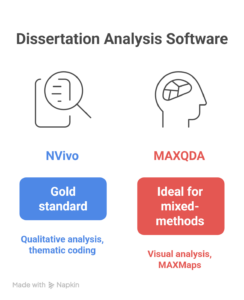
Codebook Development & Initial Coding: We develop a codebook aligned with your theoretical framework and research objectives. Using NVivo or MAXQDA, our qualitative dissertation analyst performs systematic initial coding.
Theme Development & Refinement: Codes are grouped, reviewed, and refined to generate coherent, well-evidenced themes or categories. We conduct multiple coding passes to ensure analytical depth and reduce researcher bias.
Results Writing and Interpretation: Using your dissertation template and guidelines, we will write your results section and interpret findings in relation to your research questions and existing literature, producing a clear narrative supported by participant quotations. We also generate software-produced visualizations.
Delivery, Review & Revision Support: You receive your complete analysis package: The coded data file (NVivo or MAXQDA), a structured results report, and supporting visualizations. A senior analyst reviews all deliverables before handoff. We provide revision support if your committee requests changes.
FAQ About Qualitative Dissertation Analysis
Can you help with coding qualitative data for my dissertation? Yes. Coding qualitative data is one of our core expertise. We develop a codebook tailored to your research framework, perform thematic coding of all data segments, and organize codes into coherent categories and themes using NVivo or MAXQDA. We use inductive, deductive, or abductive coding approaches depending on your methodology and provide clear documentation of every coding decision to ensure transparency and reproducibility.
Get expert qualitative dissertation analysis; rigorous, transparent, and delivered on your timeline. Order today or contact us to discuss your project requirements.