
A concept map is suitable for representing facts about a disease in a single connected picture. The figure below shows how to organize the origins, risk factors, laboratory findings, and clinical manifestations of a pulmonary or endocrine disorder into one map, which promotes thinking holistically about each concept.
What is a pathophysiology concept map?
A concept map is a diagram that places one central idea in the middle and radiates outward to related ideas, joining each pair with a line and a short phrase that names the relationship. In pathophysiology, the central idea is a disorder, and the branches are the elements that explain it: where it comes from, who is vulnerable, what goes wrong at the cellular level, how that shows up in a patient, and what the care team does about it.
What separates a concept map from an outline or a table is the emphasis on relationships. An outline lists risk factors and, separately, lists symptoms. A nursing concept map draws the arrow between them: Chronic smoke exposure leads to airway inflammation, which produces a chronic productive cough. Once you are forced to label every arrow, gaps in your understanding become obvious, because a link you cannot name is usually a link you do not yet understand.
Why mapping matters for these two systems
Endocrine disorders are built on feedback loops, where too much or too little of one hormone ripples through metabolism, fluid balance, and multiple organs at once. In both cases, the individual facts are memorable only when you can see the chain that connects them.
Mapping promotes clinical reasoning. Our human concept map creator understands how to make a concept map that is based on evidence-based information and well-researched concepts.
The core components of the map
Every strong pulmonary or endocrine concept map contains the same components. The branches are the central disorder. We use modern nursing concept map templates to create your ideas, ensuring that all core components are included.
- Central concept: The specific disorder of focus is included here, e.g., COPD.
- Etiology and origins: The component contains the direct cause or mechanism that sets the disease in motion.
- Risk factors: Content on exposures or conditions that raise the likelihood of the disorder is included here.
- Pathophysiology: The step-by-step cellular and physiologic process that goes wrong is discussed in this component, supported by accurate data.
- Clinical manifestations: The signs and symptoms the patients experience should be outlined, based on empirical data.
- Labs and diagnostics: The blood work, imaging, and tests that confirm the diagnosis should be outlined, consistent with clinical guidelines.
- Complications: The question to be answered here is: What happens if the process is not controlled?
Our experts can cate Concept map ideas that are visually appealing, empirically correct, and informative, promoting a better understanding of the concept. Ensuring that the concept map contains nursing diagnosis, interventions, and patient education results in tailored figures that are informative and tailored to nursing.
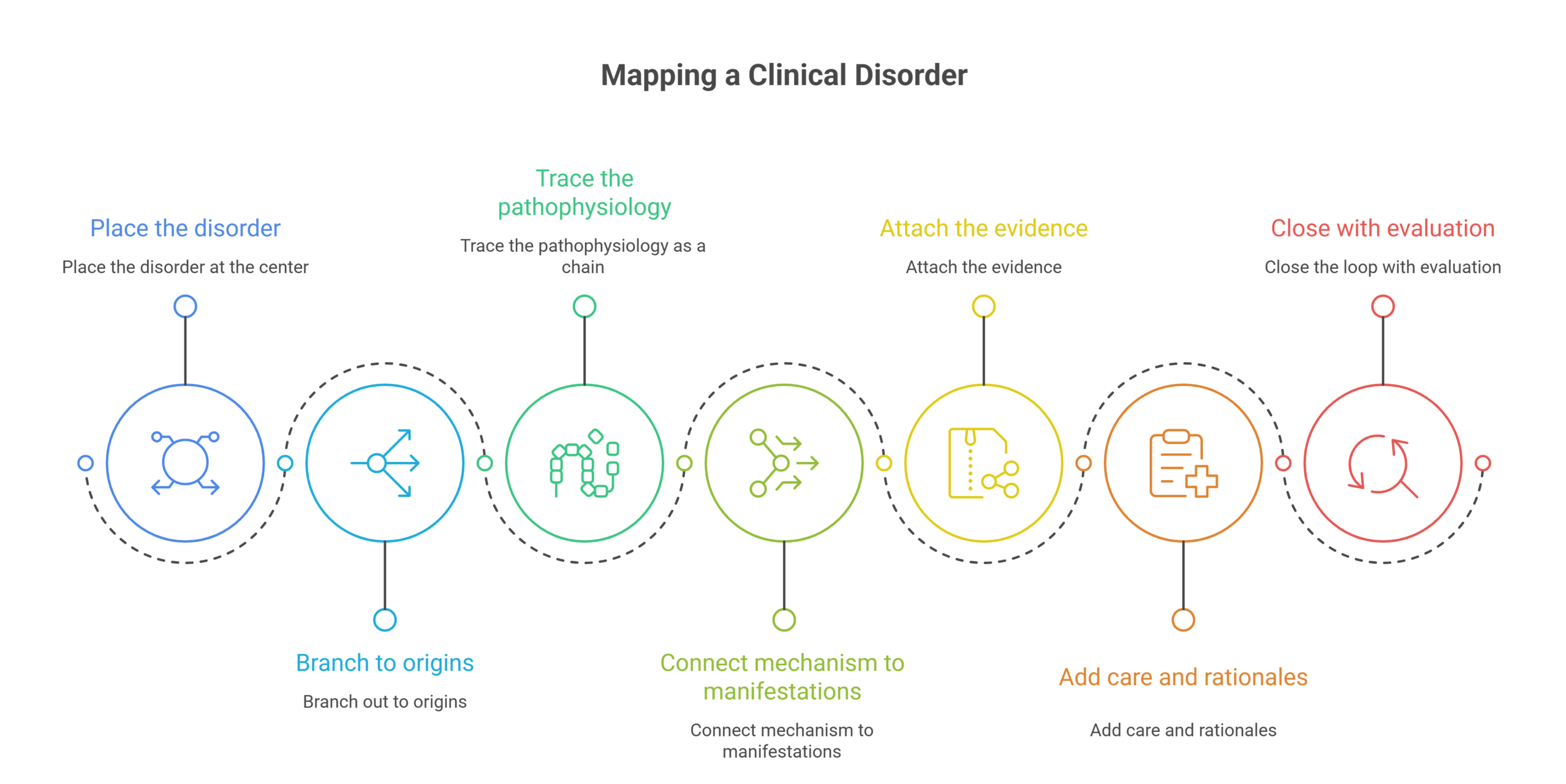
How to build a nursing concept map, step by step
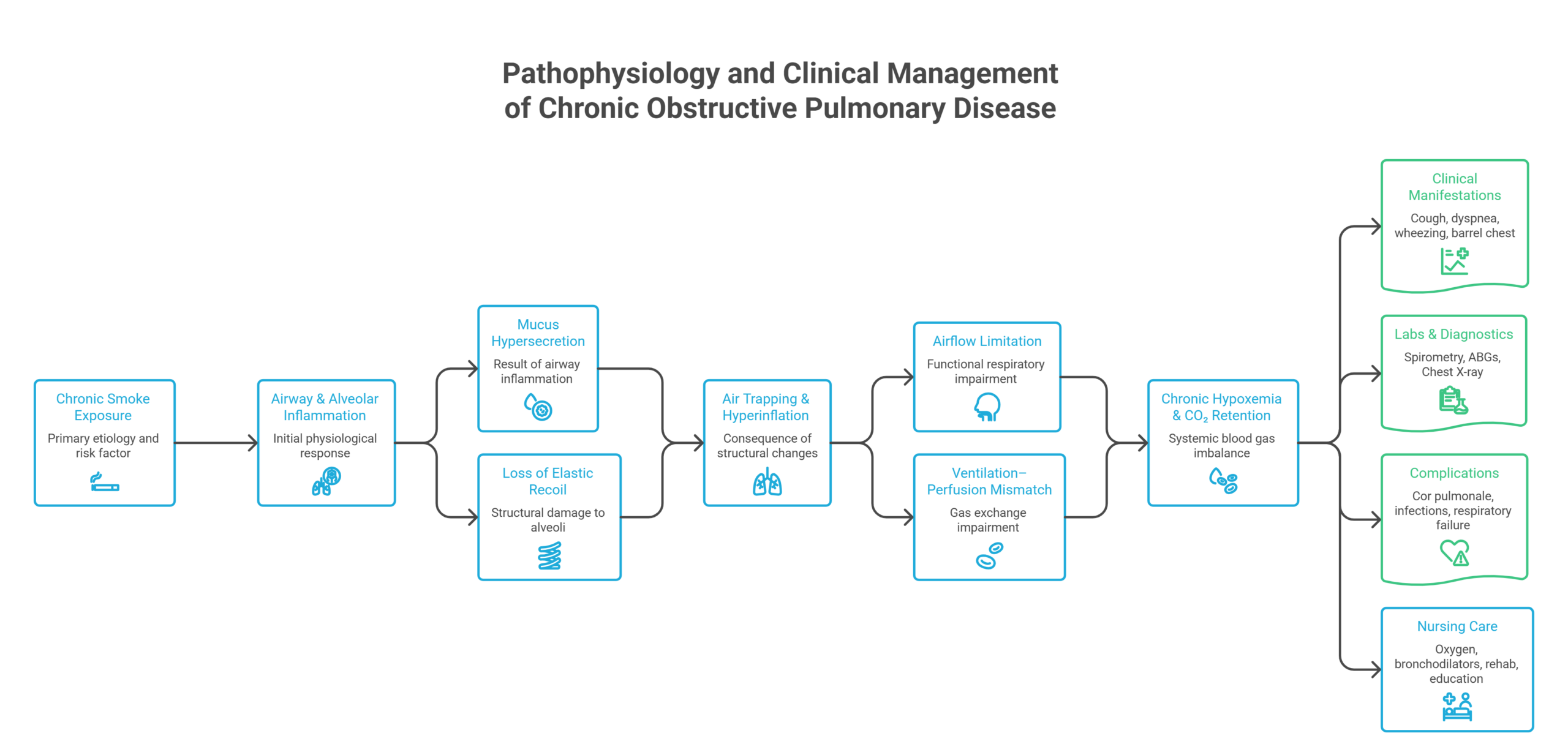
Chronic Obstructive Pulmonary Disease (COPD) Pulmonary Concept Map Template
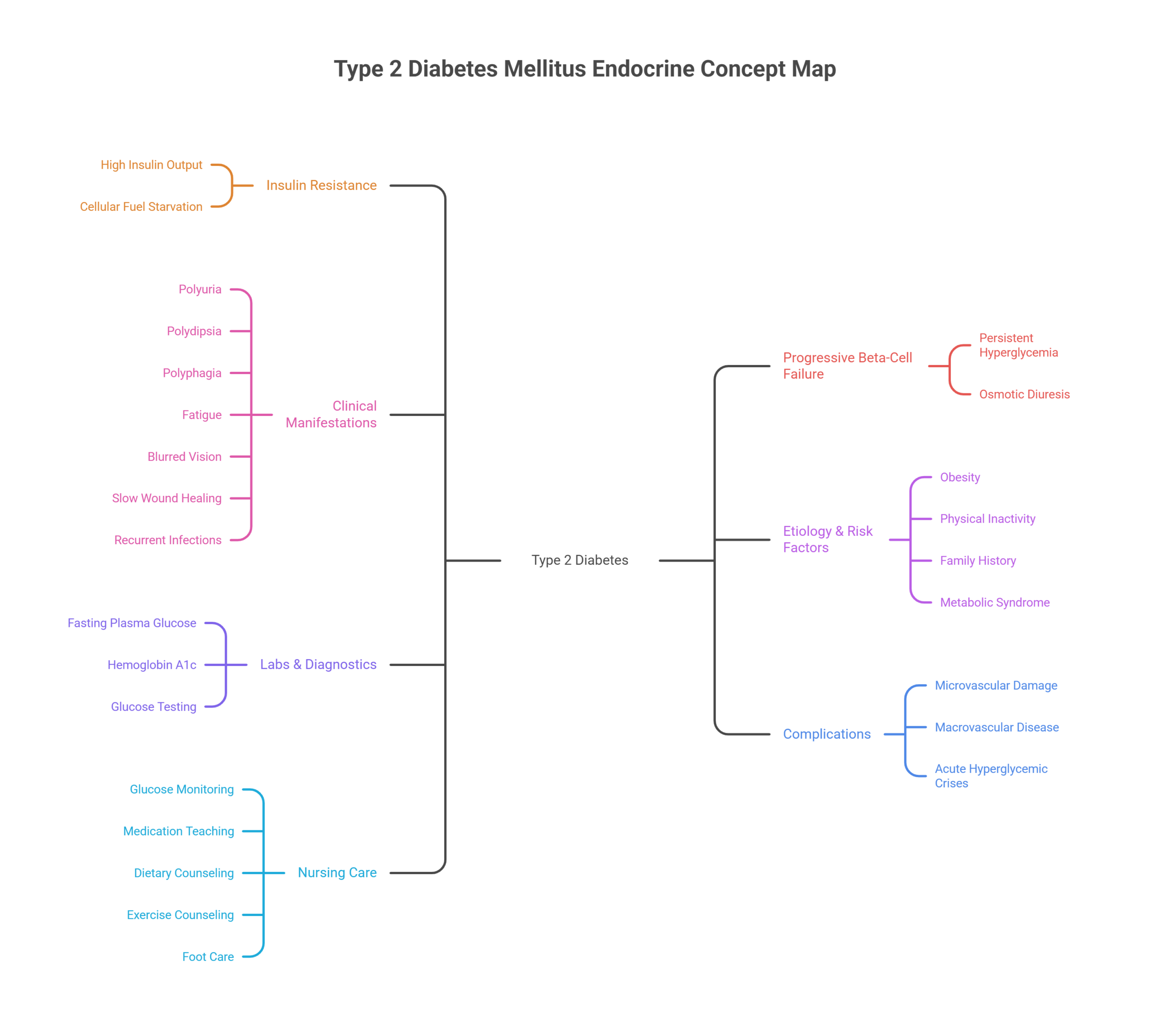
Type 2 Diabetes Mellitus Endocrine Concept Map Template
A concept map should be evidence-based and founded on clinical guidelines. Basing the concept map on GOLD ideas, informed by peer-reviewed sources, promotes the accuracy of the figure. Additionally, a concept map should also be informed by clinical judgment.