
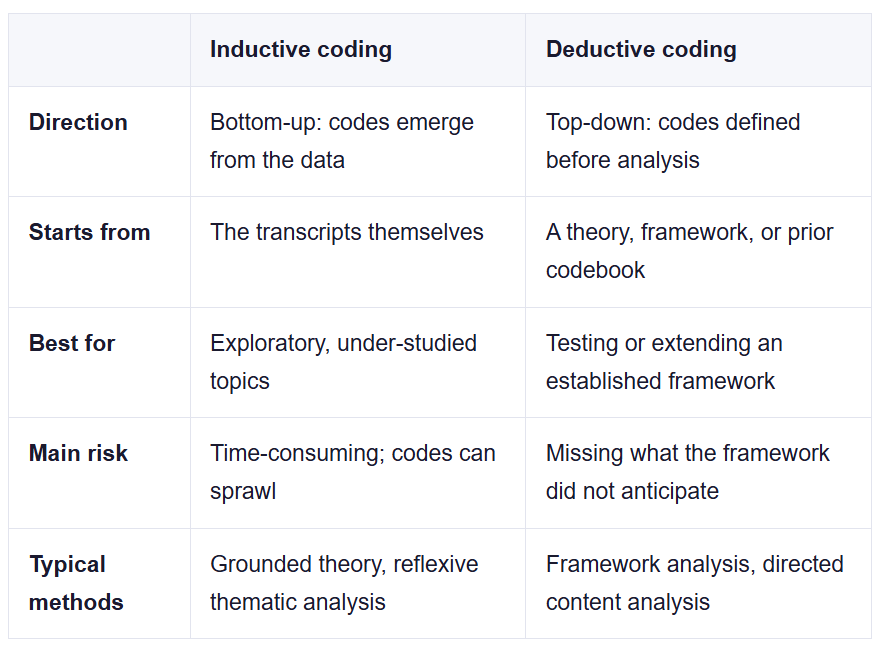
Through inductive analysis, researchers code the data without trying to fit it into a pre-existing coding frame or the researcher’s analytical preconceptions. The inductive approach involves open coding all datasets, with relevance to the research questions. Inductive coding requires analyzing the data with an open mind to create original codes from the collected data. Developing a code inductively using thematic analysis requires decreasing the raw information, creating a code, and determining the reliability of the code.
What is Inductive Coding in Qualitative Research?
Inductive coding is a bottom-up approach for analyzing qualitative data. When performing inductive coding in qualitative research the collected data, such as interview transcripts and focus group discussions. Inductive coding is mainly applicable in grounded theory and reflexive thematic analysis, where the researcher’s goal is to be open to what participants said in their responses. Inductive coding is more suitable for exploratory research questions that cannot be answered using existing theories.
Inductive vs. Deductive Coding in Qualitative Research
The difference between inductive and deductive coding in qualitative research is mainly related to where the codes come from. Inductive logic involves deriving codes from the collected data. Deductive reasoning involves applying a codebook set in advance, usually from an established theory or earlier study.
How to do Inductive Coding: 6 steps for Inductive Reasoning
Step 1: Read and Re-Read the Data
Read through everything once without coding. The aim is familiarity and understanding of the collected data.
Step 2: Do a first Pass of Open Coding
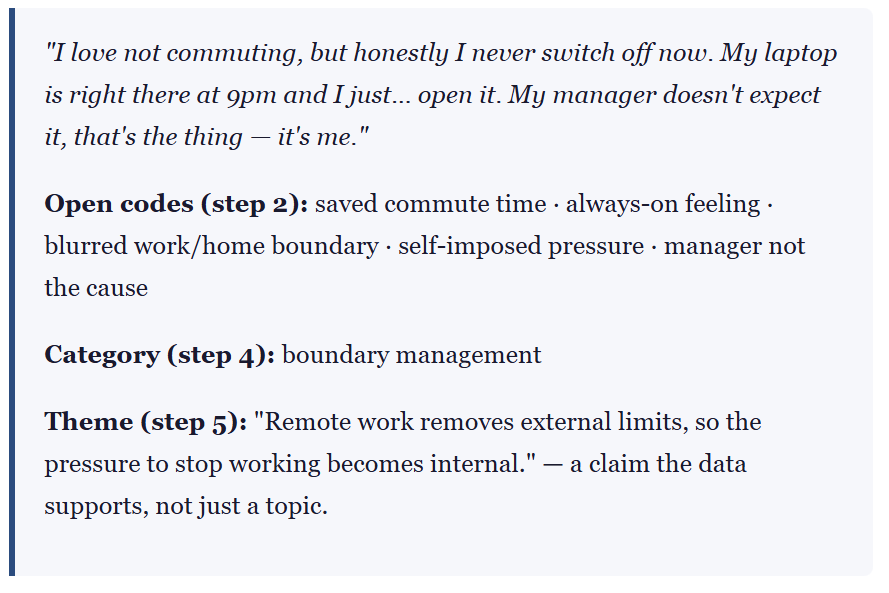
Upload the transcripts into NVivo or MAXQDA and go line by line, assigning memos or short labels to each meaningful segment. Focus on participants’ own words. A single passage can carry more than one code, and it is normal to create many codes.
Step 3: Review and Refine the Codes
After the first inactive thinking coding process, you will have overlapped or duplicate codes. Merge the ones that mean the same thing, split any that are doing too much work, and rename for clarity. Keeping short definitions for each code makes this far easier.
Step 4: Group Codes into Categories
Cluster-related codes into categories that sit one level up. This is where axial coding fits in grounded theory: you look at how codes relate and organize them into a smaller, more structured set.
Step 5: Development of Themes
Themes are the broad patterns that answer your research question. A theme pulls together several categories into a claim about the data.
Step 6: Write-up
Ensure that each theme is supported by adequate verbatim responses from participants to support confirmability.
A Worked Example of Inductive Coding in Qualitative Research
Suppose you interviewed remote workers about wellbeing. One participant says:
Hire research data experts to help you with your inductive coding in qualitative research