
Interpretative phenomenological analysis experts who make sense of a significant qualitative research experience
Interpretative Phenomenological Analysis (IPA) asks a demanding question: how does this person make sense of a significant experience? Our qualitative analysts support your IPA study from first transcript to final themes, a process informed by each participant’s account while doing the interpretive work that makes findings publishable.
- Phenomenology: Studying conscious, lived experiences as they are felt from the inside.
- Hermeneutics: The ability to craft interpretation by reading meaning, not just recording words.
- Ideography: Deep focus on the single case before any claim about the group.
What IPA is
IPA is a method used to interpret participants’ lived experience, one transcript at a time. Interpretative Phenomenological Analysis is a qualitative research approach for examining the manner in which people make sense of major life experiences. The qualitative analytics approach originated from psychology and is now widely used across health, nursing, counselling, education and the social sciences. Rather than measuring how often a topic appears, IPA works to understand what an experience means to the people living it.
What makes IPA distinctive is its double hermeneutic: the participant is making sense of their world, and the researcher is making sense of the participant making sense of their world. That second layer of interpretation is where an IPA study earns its depth and where inexperienced coding most often goes wrong, collapsing into a flat summary of what people said.
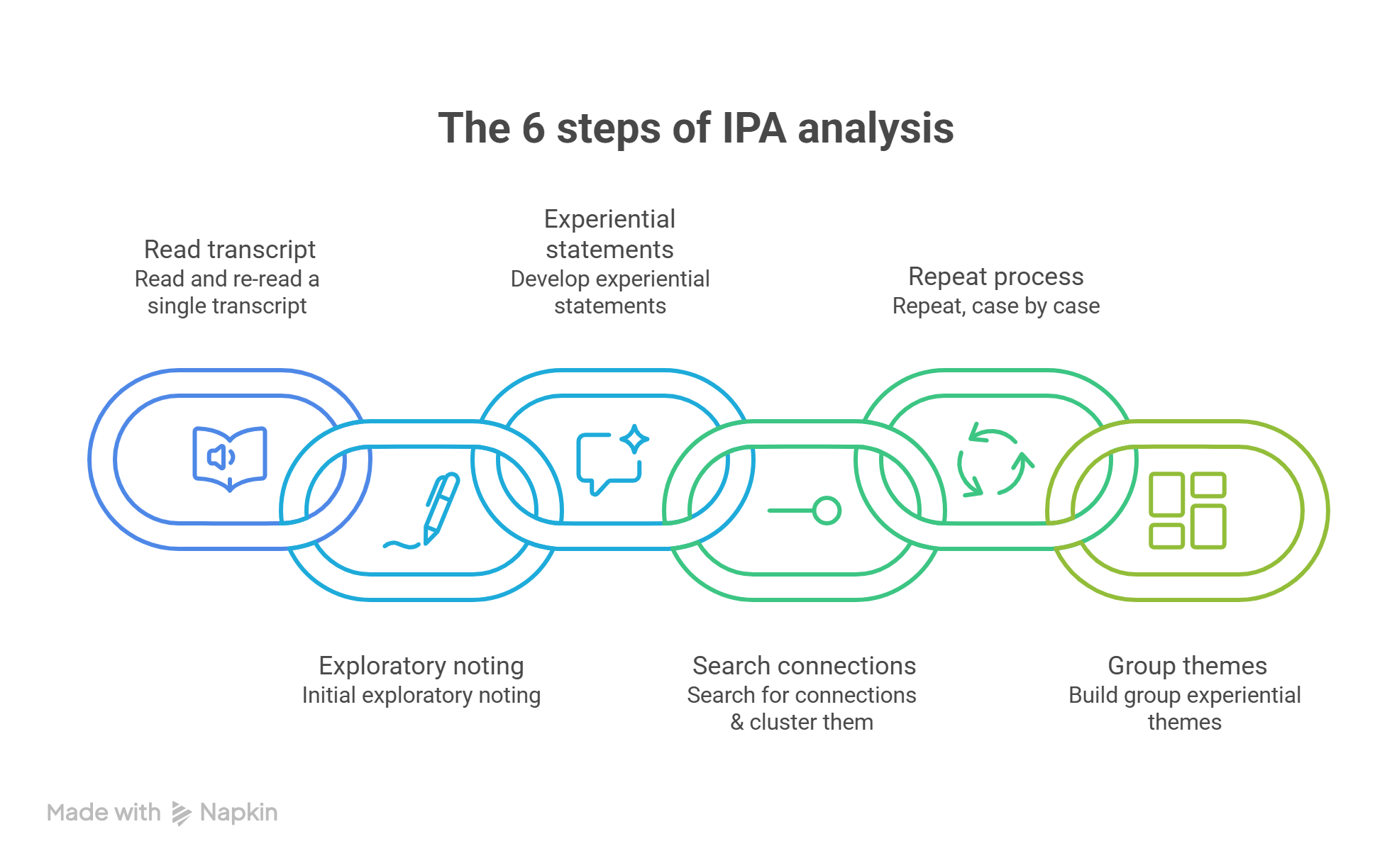
The 6 steps of IPA analysis
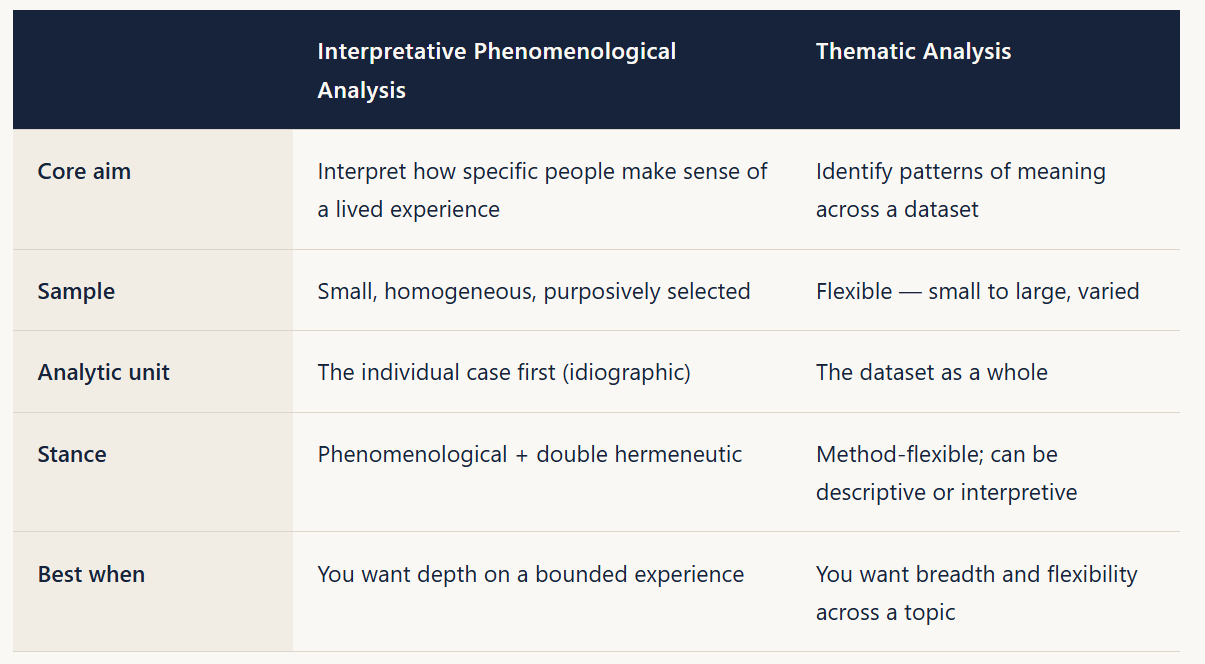
IPA vs. Thematic Analysis
Hire our Interpretative phenomenological analysis experts and get exceptional qualitative research analysis using NVivo or MAXQDA, promoting in answering your research question(s). We code and manage IPA projects using industry’s leading computer-assisted qualitative data analysis (CAQDAS) packages, matching the tool to your workflow and, where relevant, your supervisor’s or journal’s expectations. Our IPA experts will provide you with coding frameworks, theme development and an audit trail you can use to explain the analysis to a supervisor or reviewer.
Ready to move your IPA study forward? Tell us about your research question and your transcripts.